Can a Free AI Fanfic Generator Write a 5000-Word Fanfic Novel?
Yes, but the best result usually does not come from one giant prompt. A 5000-word fanfic draft needs continuity, pacing, scene goals, and relationship progression. If you ask for everything at once, many AI tools rush the middle, repeat character emotions, or flatten the fandom voice.
A stronger method is to treat the generator like a drafting partner. First define the fandom, characters, pairing, trope, canon mode, POV, rating boundary, and final emotional turn. Then split the story into three to five sections. Generate each section with a clear scene goal and paste a short continuity note before asking for the next part.
For a 1000-word fanfic, one focused prompt can work well. For a 3000 to 5000 word fanfic novel draft, use a mini-outline, generate in parts, and edit the transitions yourself. That keeps the story readable instead of feeling like five unrelated scenes stitched together.
Best workflow
Plan the emotional arc first, draft in sections, keep a continuity note, then revise dialogue and pacing before posting anywhere.
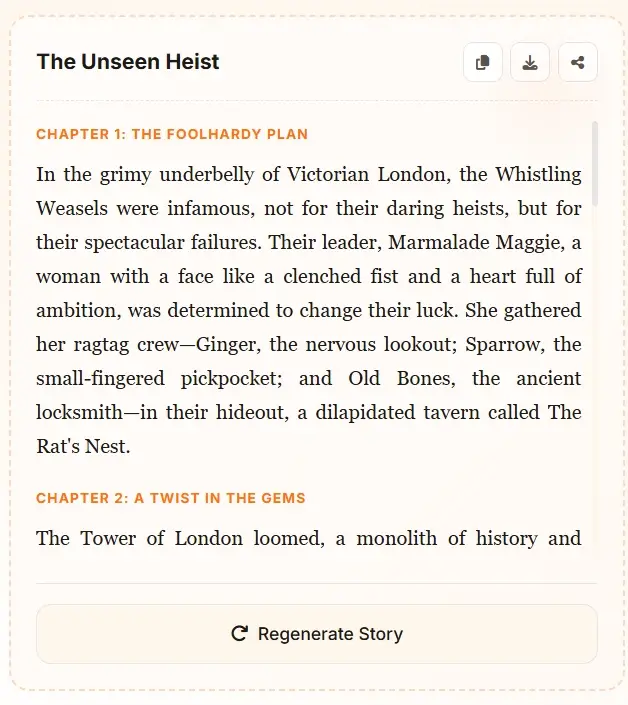
1000 Words vs 5000 Words: Choose the Right Fanfic Shape
Searches for free AI fanfic novel 1000 words and free AI fanfic novel 5000 words sound similar, but they represent different writing jobs. The right structure depends on how much emotional movement you want.
| Target length | Best use | Suggested structure | Main risk |
|---|---|---|---|
| 1000 words | One-shot, confession, missing scene, short AU moment | One scene with a clear beginning, turn, and ending | Too much setup leaves no room for payoff |
| 2000-3000 words | Chapter draft, alternate ending, emotional confrontation | Two to three scenes with one central conflict | Middle repeats the same feeling |
| 5000 words | Mini fanfic novel, canon divergence, slow-burn payoff | Four to five sections with continuity notes | Continuity breaks if generated in one pass |
If you only need a confession, missing scene, or short AU moment, 1000 words is often enough. If you want a fanfic that feels like a small novel, use the 5000-word range for setup, escalation, payoff, and aftermath.
A Reliable Workflow for Long AI Fanfiction
Use this process when you want a longer fanfiction draft that still respects the fandom premise and character relationship.
1. Write the canon and trope boundary
Tell the AI whether the story is canon-compliant, canon divergence, AU, or crossover. Add the exact trope, such as slow burn, hurt/comfort, fake dating, found family, or enemies to lovers. This prevents the draft from drifting into generic romance or adventure beats.
Example: Canon divergence after the final battle; hurt/comfort; unresolved confession; keep the tone quiet, not comedic.
2. Define one relationship arc
Long fanfic becomes messy when every character gets equal emotional weight. Choose one central arc: trust rebuilt, rivalry softening, secret revealed, found family accepted, or grief turned into action. Every section should move that arc forward.
Example: Part 1: distance. Part 2: forced cooperation. Part 3: vulnerability. Part 4: choice. Part 5: aftermath.
3. Generate sections, not the whole novel
Ask for 700 to 1200 words at a time. Before each new prompt, paste a short recap of what already happened, what must stay consistent, and what the next section needs to accomplish. This gives you better pacing and fewer contradictions.
Example: Continue from the infirmary scene. Character A knows the secret but has not said it aloud. Character B is defensive. End with a decision, not a kiss yet.
4. Keep a continuity note
After each section, save names, injuries, timeline details, emotional promises, and unresolved objects. Long AI fanfiction fails when the tool forgets a scar, changes a room, or resolves tension too early.
Example: Continuity: rainstorm, broken watch, left shoulder injury, no public confession, antagonist still missing.
5. Revise for fandom voice
The draft is only the beginning. Replace bland lines, adjust speech patterns, trim repeated internal monologue, and add fandom-specific sensory details. This is where the piece stops sounding generated and starts sounding like yours.
Example: Change generic comfort dialogue into a line that matches the character's actual restraint, humor, or avoidance pattern.
Prompt Template for a 5000-Word Fanfic Draft
Copy this structure into a free AI fanfic generator and fill the details before generating the first section. Keep it specific, but do not overload it with every canon fact at once.
Long fanfic prompt structure
- Fandom and canon mode: Name the fandom and say whether this is canon-compliant, canon divergence, AU, or crossover.
- Characters and pairing: List the main characters, relationship dynamic, ship if relevant, and any character voice constraints.
- Trope and emotional arc: Choose one primary trope and one emotional movement from beginning to end.
- Word-count plan: Ask for section 1 of 4 or 5, not the whole 5000 words in one response.
- Scene objective: Give the section a job: reveal a secret, force cooperation, create doubt, trigger a choice, or land the aftermath.
- Boundaries: Mention rating limits, content warnings to avoid, POV, tense, and whether to use dialogue-heavy or descriptive pacing.
For best results, generate the opening section first, then revise the prompt for each continuation. A long fanfic should feel intentionally paced, not automatically expanded.
Example 5000-Word Fanfic Novel Plan
Here is a simple five-part plan that works for many fandoms, especially romance, rivalry, hurt/comfort, and canon divergence.
| Part | Story goal | Prompt focus |
|---|---|---|
| Part 1 | Open with tension and a reason the characters must stay together | Setting, POV, unresolved conflict, no confession yet |
| Part 2 | Force cooperation and reveal the first vulnerability | Dialogue, obstacle, small act of care |
| Part 3 | Escalate the external problem and emotional stakes | Choice, secret, consequence, stronger pacing |
| Part 4 | Deliver the emotional turn or confession without rushing | Subtext, restraint, decision, payoff |
| Part 5 | Show aftermath and leave the story complete | Quiet resolution, changed dynamic, final image |
Editing Checklist Before You Post or Share
A free AI fanfiction generator can create a strong draft, but long-form fanfic needs human editing. Use this checklist before treating the output as finished.
- Check character voice: Rewrite lines that sound too polite, modern, dramatic, or generic for the characters.
- Remove repeated emotions: AI drafts often restate longing, guilt, fear, or attraction several times. Keep the strongest version and cut the rest.
- Strengthen transitions: Add connective tissue between generated sections so the story does not jump from scene to scene without cause.
- Fix canon details: Verify names, powers, settings, timelines, relationship history, and fandom-specific terminology.
- Add tags and warnings: If you publish on a fandom archive, choose accurate tags, ships, rating, warnings, and author notes.
- Keep your own voice: Use the AI draft as scaffolding. Your edits should decide what the story really means.
Use the Free AI Fanfic Generator for the Drafting Step
The dedicated fanfic tool on this site is the best starting point because it already asks for fandom, characters, pairing, tropes, canon mode, and scenario. Those fields match the long-form workflow above better than a blank story prompt.
For a 5000-word goal, choose a longer output option for the first section, then continue manually with a recap. For a 1000-word goal, use a single focused prompt with one emotional turn and one scene objective.
Do not try to hide that the draft needs editing. The advantage of a free no-sign-up workflow is speed: you can test several openings, keep the strongest one, and spend your real effort on continuity, voice, and payoff.
Free AI Fanfic Novel FAQ
About the Author

Sophie Laurent
Creative Writing & AI Tools Reviewer
Sophie reviews AI writing tools from a writer's workflow perspective: prompt setup, draft quality, revision effort, continuity, and whether the final text can become something readers would actually finish.
Sources & Further Reading
- Google Search Console opportunity data for aistorygenerator.blog, 28-day window ending May 30, 2026
- Similarweb keyword data for aistorygenerator.blog, including free AI fanfic novel 1000 and 5000 word queries
- Organization for Transformative Works: archive tagging and fanwork context — transformativeworks.org
Last updated: May 31, 2026